
Bus Stop
by William Inge
Project Overview
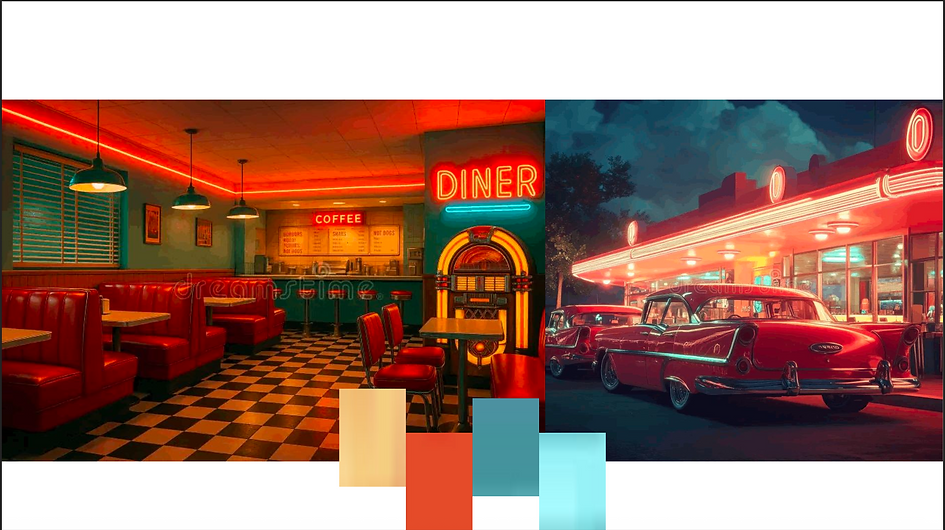
Bus Stop takes place in a small diner during a snowstorm in the middle of the night. Several travelers are forced to stay together while waiting for the road to reopen. As the night continues, tensions rise and relationships between the characters begin to change. The lighting design focuses on the contrast between the warm interior of the diner and the cold winter environment outside. Through color and intensity changes, the lighting supports the emotional development of the characters throughout the night.
Design Concept
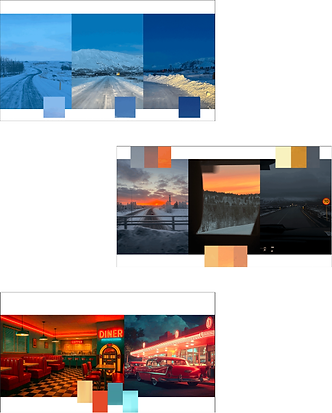
The main concept of this lighting design is contrast between warmth and coldness. Inside the diner, warm light creates a sense of safety and intimacy. The outside world is represented with cold blue tones to show the harsh winter environment. As the story develops, the lighting shifts to reflect emotional changes between the characters.
-
Warm interior lighting
-
Cold blue light outside the window
-
Focused lighting during emotional moments
-
Gradual transition from night to dawn
-
By the end of the play, the lighting becomes softer and brighter to represent reconciliation and a new beginning.
color Tone
Key Lighting Moments
1. Character Entrance
When characters enter through the diner door, a flash of cold light appears from outside. This emphasizes the strong contrast between the warm diner and the freezing environment outside.
2. Conflict Scene
When Cherie slaps Bo, the lighting becomes harsh, bright, and cold, highlighting the sudden emotional conflict between the characters.
3. Romantic Moment
At the end of the play, when Bo and Cherie reconcile, the lighting shifts to golden warm tones mixed with soft pink, creating a romantic atmosphere that represents emotional resolution.
4. Dawn Transition
As morning approaches, the exterior lighting gradually changes from deep blue to soft dawn blue with orange tones, showing the passage of time and the end of the long night.


Light Plot Process

